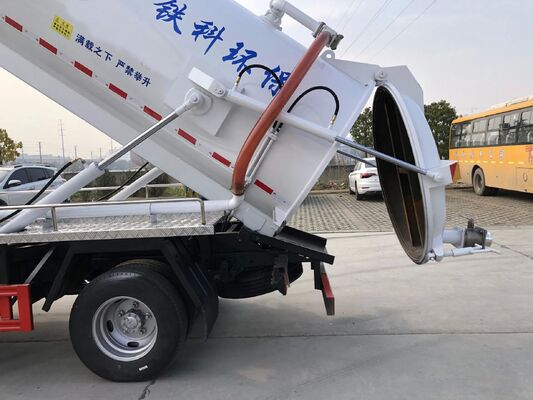
产品详情与配置说明
High-performance vacuum cleaner
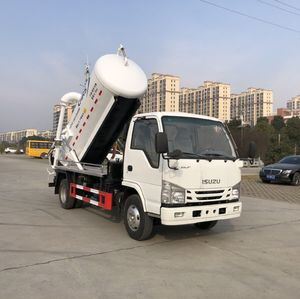
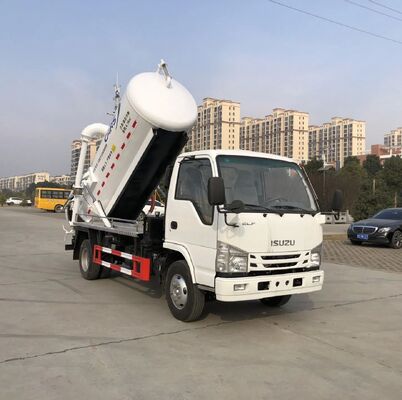
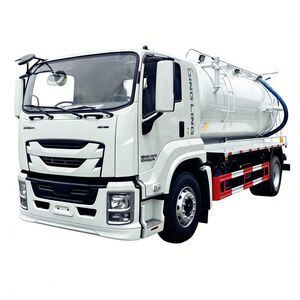
A cleaning and suction vehicle is a specialized vehicle that combines cleaning and suction functions. It is usually equipped with a high-pressure cleaning pump and a vacuum suction system, which can efficiently clean and suction sewage from sewers, inspection wells, septic tanks, etc.
This type of vehicle has a wide range of applications in urban environmental sanitation, municipal engineering, and industrial fields. It can quickly and effectively clean various dirt and blockages, keep the drainage system unobstructed, and ensure public health and environmental quality. The operation of cleaning and suction trucks is relatively flexible and can adapt to different work scenarios and job requirements.
Specification
1. Suction Capacity: This is the most critical performance characteristic of a sewage suction truck, primarily determined by the vacuum pump power and vacuum level.
The vacuum level typically reaches -0.09 MPa or higher, enabling rapid suction of waste from low-lying areas or confined spaces into the tank.
The suction depth is generally 5-8 meters, with some high-end models exceeding 10 meters, meeting the needs of various operational scenarios.
2. Tank Performance: This directly impacts load capacity and operational safety.
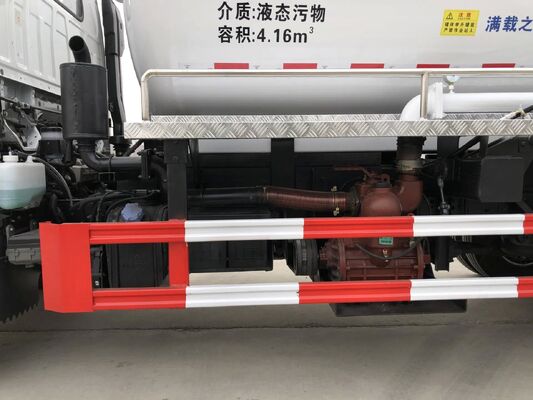
Tanks are typically constructed of high-quality carbon steel or stainless steel, the former being cost-effective and the latter corrosion-resistant, allowing for a choice based on waste type.
Effective volumes range from 3 to 20 cubic meters, with smaller models suitable for residential operations and larger models for municipal projects.
3. Discharge Efficiency: This determines the operating cycle speed and is primarily dependent on the tank's tilt angle and auxiliary discharge devices.
The tank can be hydraulically lifted, typically with a tilt angle of 45° or higher, utilizing gravity for rapid waste discharge. Some models are equipped with a high-pressure washing system, which can help clean residual dirt in the tank and avoid secondary contamination.

Key Configurations
Engine: High-torque, low-emission diesel engine (compliant with Euro 2, 3, 5, and 6 standards)
Hydraulic System: Precision-controlled pumps and valves ensure smooth operation
Chassis: Isuzu, HOWO, SHACMAN Automobile, JAC, Futian, Jiangling, FAW
Tank Capacity: Customizable upon request
Vacuum Pump: Domestic or imported Moro/Battioni/Pagani brands available
right elevation
left elevation
front elevation
Technical Specifications
(Custom configurations available upon request.)
Model | CLW5070GQW6 | Product Name | Vacuum suction truck |
Gross mass (kg) | 7360 | Overall Dimensions (mm) | 5995x2150x2450 |
Tank capacity (m³) | 4 | Wheelbase (mm) | 3360 |
Maximum suction depth (m) | 8 | Tire Specification | 7.00R16 |
Horizontal suction capacity (m) | 50 | Number of Tires | 6 |
Manipulation type | automatic/manual | Engine Model | 4KB1-TC60 |
Fuel Tank (L) | 100 | Power (Kw) (Horsepower) | 96 130 |
Drawings & Dimensions
Detailed CAD drawings and dimensional diagrams are available for download here or upon inquiry. Our engineering team can provide tailored designs to meet specific project requirements.
After Sales Service
Standard Warranty: 12 months or 30,000 km (whichever comes first).
Extended Warranty: Optional warranty up to 36 months.
Global Support: 24/7 technical support and spare parts availability.
Training: On-site or remote operation/maintenance training.
Company Profile
CHENGLI SPECIAL AUTOMOBILE CO., LTD
Chengli Special Purpose Vehicle Co., Ltd., located in the southern suburbs of Zengdu District, Suizhou City, Hubei Province, was established in September 2004 with registered capital of 100 million yuan. The company currently has total assets of 1.645 billion yuan, occupies 610 mu (approximately 16 acres), and employs 1,786 people. Its main business scope includes the research and development, manufacturing, sales, and service of complete vehicles, special-purpose vehicles, new energy vehicles, and emergency support vehicles.
The company has obtained ISO9001 quality management, ISO 14001 environmental management, and ISO45001 occupational health and safety management system certifications. It also holds various management certifications, including five-star after-sales service, 3C compulsory certification, automotive energy conservation and environmental protection certification, automotive tax exemption certification, American Society of Mechanical Engineers (ASME) certification, and EU Agreement ADR. The company holds production qualifications for special-purpose vehicles, complete vehicles, new energy vehicles, truck-mounted cranes, mobile cranes, and fire trucks.
The company's "Chengliwei" branded products are popular both domestically and internationally, with exports to over 50 countries and regions, including Nigeria, Ghana, Angola, Bolivia, Chile, Cambodia, and Myanmar.
Why Choose Us?
Other Products
OEM/ODM capabilities
Competitive pricing & bulk discounts
Fast shipping & customs clearance support
Turnkey project solutions
Competitive pricing & bulk discounts
Fast shipping & customs clearance support
Turnkey project solutions
Sprinkler truck
Sewage suction truck
Road sweeper
Tank truck
Refrigerated truck
Crane
FAQ
Q: What is the order lead time?
A: Standard models ship within 15-30 days; customized models ship within 30-45 days.
Q: Do you provide overseas after-sales service?
A: Yes, we have partner service centers in major regions.
Q: Can I request a custom order?
A: Of course! We also offer custom accessories.
Q: What export documents do you provide?
A: Complete export packaging (commercial invoice, packing list, bill of lading, certificate of origin, etc.).
Q: How do I place an order?
A: Contact us by email or phone for a quote, then confirm with a purchase order.
Ratings & Review
Recommended Products
Overall Rating
Rating Snapshot
The following is the distribution of all ratingsAll Reviews